
Gidel provides a modular FPGA-based vision infrastructure designed to support real-time volumetric imaging and augmented reality applications. These systems enable synchronized capture and processing of data from multiple cameras. As a result, they can reconstruct three-dimensional scenes with high accuracy, low latency, and deterministic performance.
Volumetric imaging places unique demands on vision architectures. In particular, multi-camera synchronization, sustained high bandwidth, and real-time processing must operate predictably. Otherwise, accurate 3D reconstruction and stable augmented reality overlays cannot be achieved. As system complexity grows, software-centric approaches often struggle to scale.
Gidel supports volumetric imaging system design with a portfolio of modular hardware building blocks. These offerings allow system integrators to tailor acquisition, processing, and deployment to the needs of each 3D capture and AR pipeline.
A key component is Gidel’s InfiniVision multi-camera vision system. It enables deterministic grabbing and synchronization across large-scale camera arrays, including configurations exceeding 100 cameras.
Depending on system requirements, developers can select from:
All FPGA processing runs inline to preserve low latency and predictable timing. This ensures image quality remains consistent across all views, which is essential for accurate volumetric alignment.
Standard Processing Capabilities:
Bandwidth Optimization:
To optimize storage, the FPGA supports real-time data reduction using JPEG, Lossless, and Quality+ compression, alongside region-of-interest extraction and scaling.
Volumetric imaging applications increasingly rely on high-resolution sensors to enable fine spatial detail and precise depth estimation. Gidel’s FPGA-based architecture handles these high-resolution workflows without introducing additional latency or timing jitter.
By combining inline processing with deterministic data handling, the system maintains stable performance as image resolution and processing complexity increase.
Many volumetric imaging workflows require reliable recording of multi-camera streams for offline 3D reconstruction, algorithm validation, and post-session analysis. To address these needs, Gidel provides dedicated Recording Solutions.
These recording platforms integrate with Gidel’s architecture to capture and store image streams deterministically, without disrupting real-time processing. As a result, volumetric imaging systems can support both live operation and high-quality offline reconstruction.
Development is supported through Gidel’s Software Development Tools. These tools enable developers to design, integrate, and optimize FPGA-based imaging pipelines. They provide fine-grained control over latency, data flow, and processing behavior, which is critical for advanced volumetric imaging and augmented reality systems.
Need more information?

FreeD technology, enhanced by Gidel’s imaging solutions, was first showcased at the 2012
London Olympics.
This demonstration highlighted the potential of 3D video technology in
providing immersive viewing experiences.
Following its success at the Olympics,FreeD technology was employed in
various high-profile sports broadcasts, including NFL games and New York Yankees matches.
This adoption by major sports leagues underscored the system’s capability to revolutionize sports broadcasting.
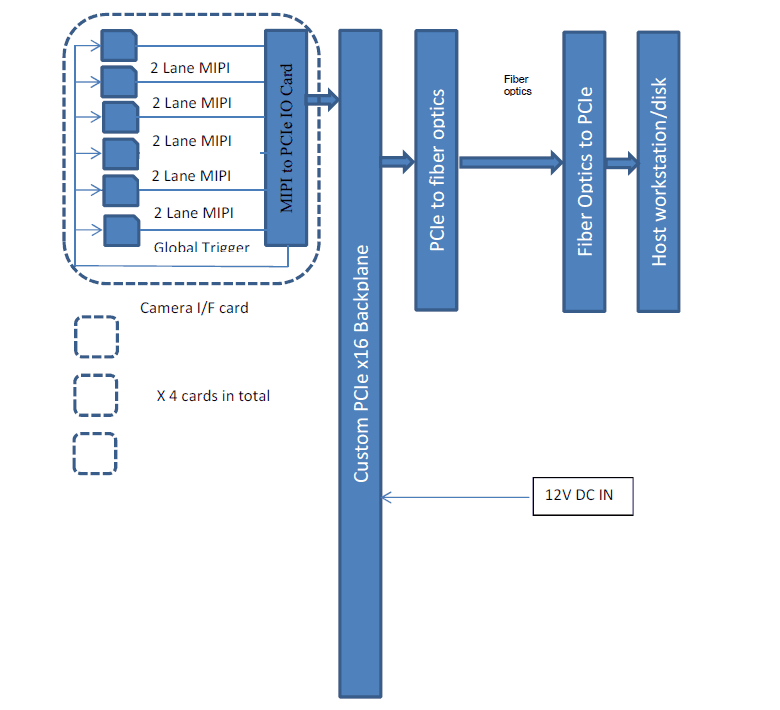
New 360-Degree Camera Solution Utilizing Gidel’s InfiniVision Technology.
Open

Join Reuven Weintraub, founder and CTO of Gidel, as he reveals how to unlock exceptional image processing performance by adding FPGA’s processing to NVIDIA Jetson edge AI systems.
Watch
Reuven Weintraub – Gidel Founder and CTO describes how to boost performance in Machine Vision and Imaging systems. This talk has been given at the Vision Show 2024 Stuttgart, during the Vision Days Forum.
Watch
Image processing acceleration on NVIDIA Jetson embedded computer at the Embedded World 2024 show.
Watch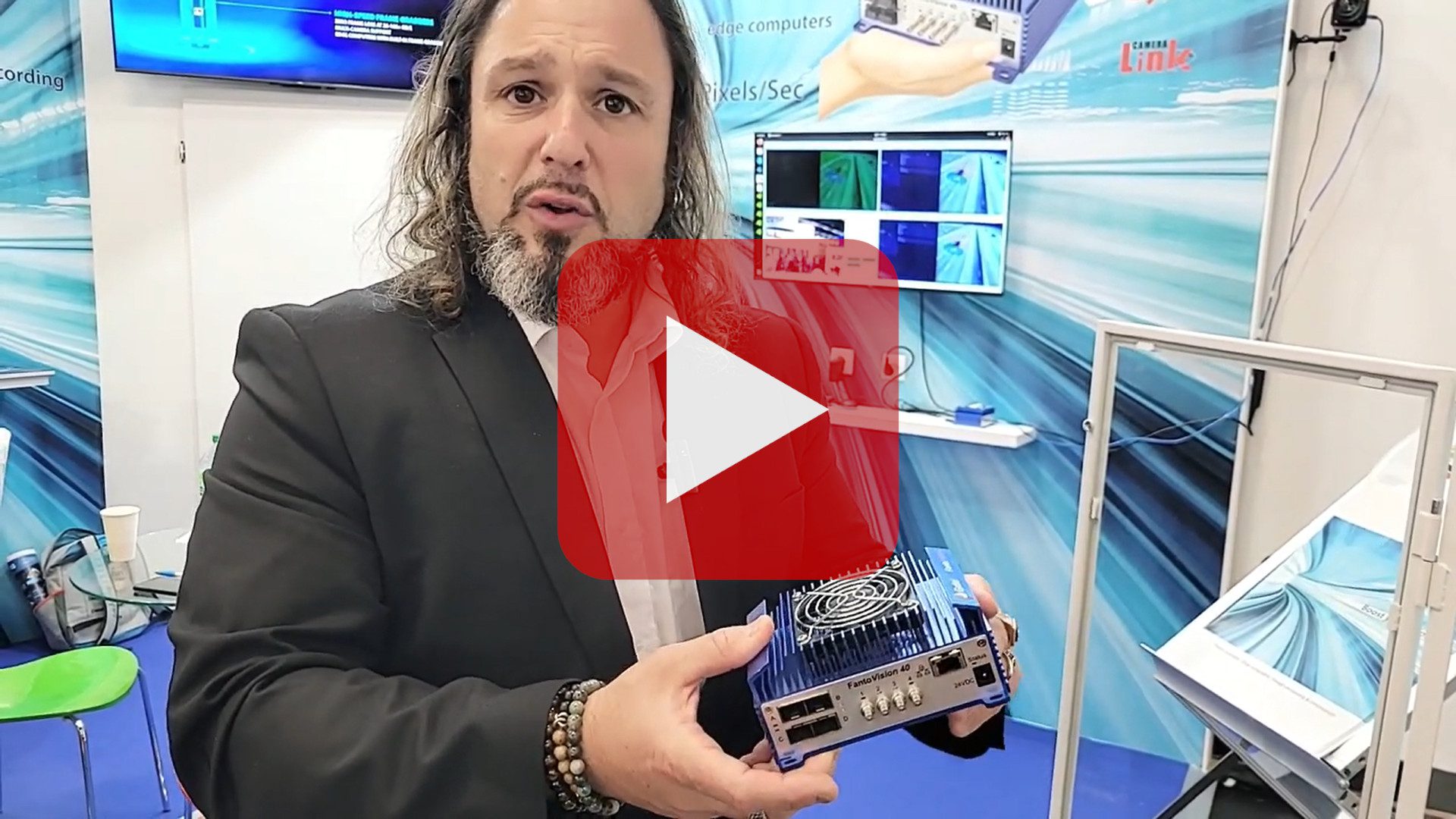
Gidel edge computers and frame grabbers at the Embedded World show 2024.
Watch
A short video introduction to FantoVision edge computers – 2023.
Watch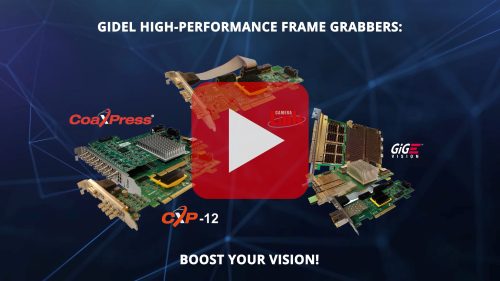
Boost your vision! Gidel’s high-performance GigE Vision, Camera Link and CoaXPress frame grabbers help overcome bandwidth bottlenecks in high-resolution and/or high-speed computer vision applications.
Watch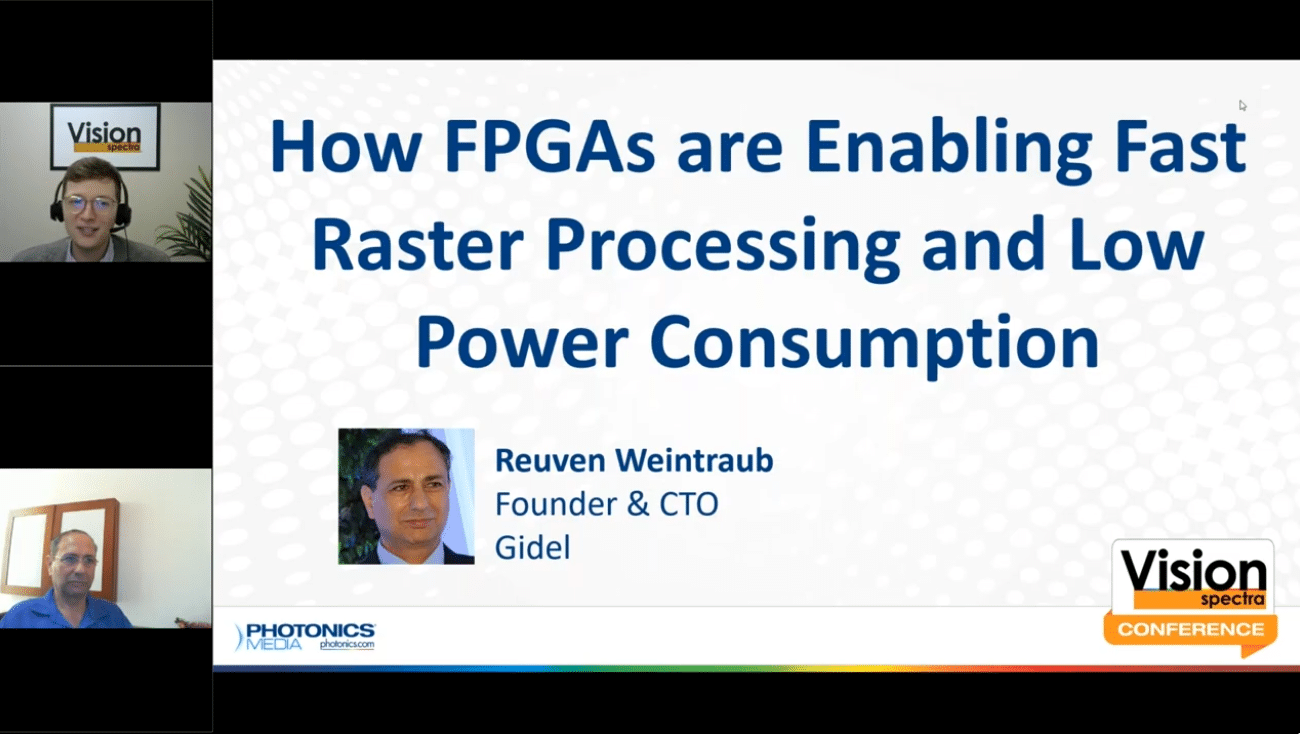
Gidel presented its FPGA-based architecture capable of processing Giga+ Pixels per second while maintaining exceptionally low power consumption.
The session demonstrated how Gidel’s scalable FPGA solutions deliver real-time imaging performance, energy efficiency, and deterministic throughput for advanced vision and imaging systems.

Reuven Weintraub, Founder and CTO of Gidel, presented Gidel’s solutions to perform high-bandwidth imaging on the edge at InVision TechTalk webinar held on September 2023.
WatchGidel founder and CTO Reuven Weintraub present the new with FantoVision edge computers for 10GigE Vision, Camera Link and CoaXPress interface for embedded vision on the edge at the Embedded World Show 2022 in Nuremberg, Germany.
Watch
Gidel founder and CTO Reuven Weintraub explain the benefits of Gidel’s Altera-based high-performance FPGA modules for fast and easy development.
Watch
Gidel founder and CTO Reuven Weintraub present the performance and versatility of Gidel’s GigE Vision, Camera Link and CoaXPress frame grabbers for high-speed image acquisition and pre-processing at the Embedded World 2022 in Nuremberg, Germany.
Watch
Presented by Reuven Weintraub, this talk highlighted Gidel’s expertise in real-time processing over Gigapixel/s image streams, demonstrating how FPGA-based architectures enable deterministic latency, scalable throughput, and efficient handling of ultra–high-resolution vision data.
Watch
Ron Muller presenting Gidel’s first heterogeneous Edge Computer Vision combining FPGA and NVIDIA Jetson at Industrial Vision Days conference at VISION 2021 show in Stuttgart, Germany.
Watch
Modular Recording & Streaming Solutions for Vision and Imaging Systems.
Open
Advanced vision systems rely on one or multiple high-resolution, high-speed cameras. These capture and deliver multiple gigapixels per second that need to be processed and/or compressed in real-time. While camera sensor technology and supporting interfaces are quicky evolving, traditional PCIe/CPU/GPU-based PC-architectures are lacking the required performance to capture, process, and store images at such data rates.
Open
