
FDB Series: Tiny FPGA Modules for High-Performance Embedded Systems
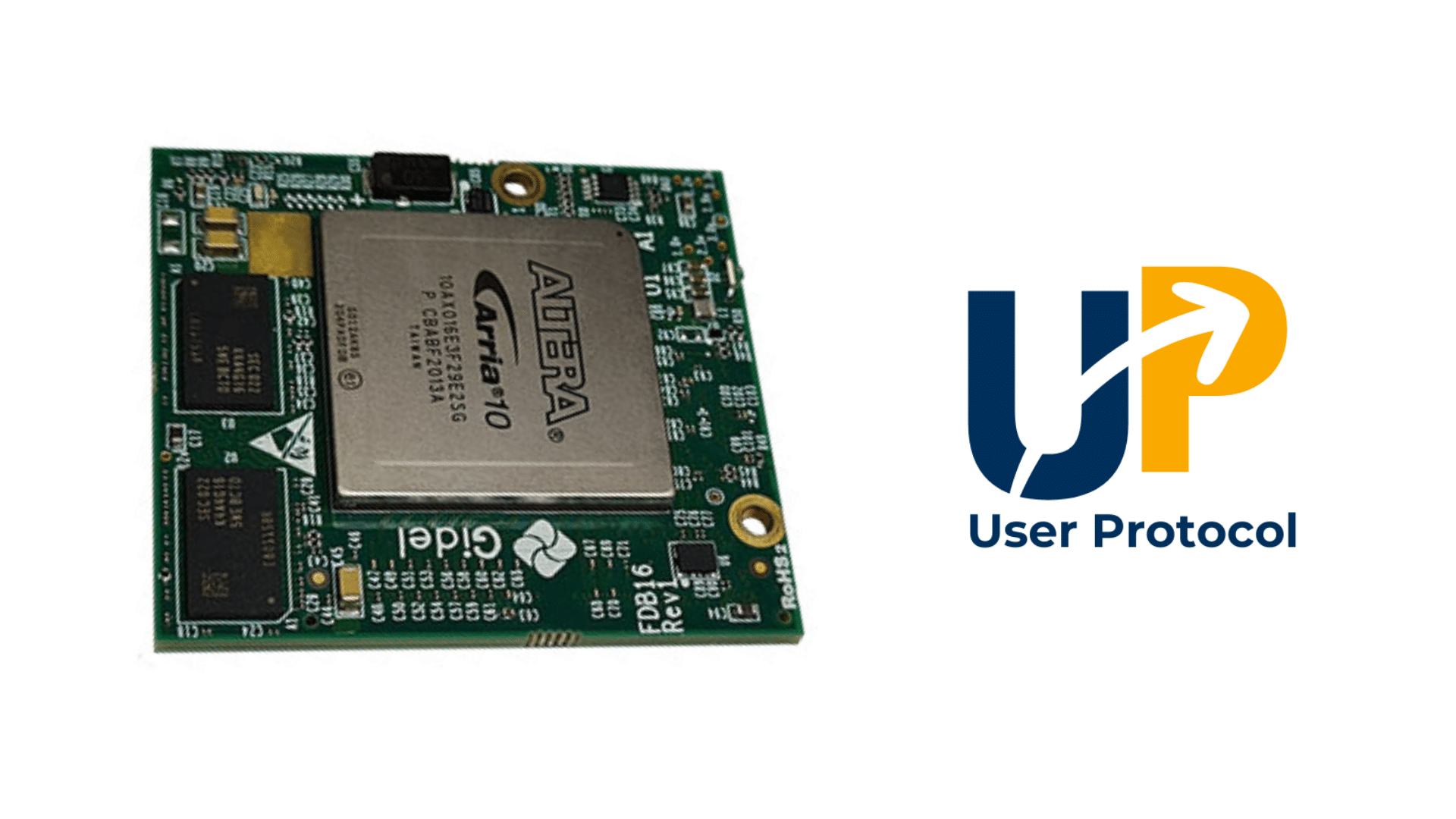
The FDB series includes FDB16 (49 × 54 mm), FDB27 (58 × 58 mm), and FDB66 (58 × 58 mm). These modules rank among the tiniest FPGA modules available on the market today, making them ideal for custom PCIe-based or standalone, space-constrained systems. Moreover, their ultra-compact form factor enables seamless integration into embedded designs while maintaining full performance capability.
Performance and Memory in the FDB Tiny FPGA Modules
Each FDB module uses an Altera Arria 10 GX FPGA, supports up to 10 GB DRAM at 24 GB/s, and includes 16 × 14.2 Gb/s transceivers (10 full duplex plus 2 RX only). Consequently, this tiny FPGA platform delivers high performance at a competitive price. In addition, the robust design supports mission-critical tasks and long-term deployment. Therefore, the platform suits applications that require efficiency, durability, and scalability.
Real-Time Image Processing
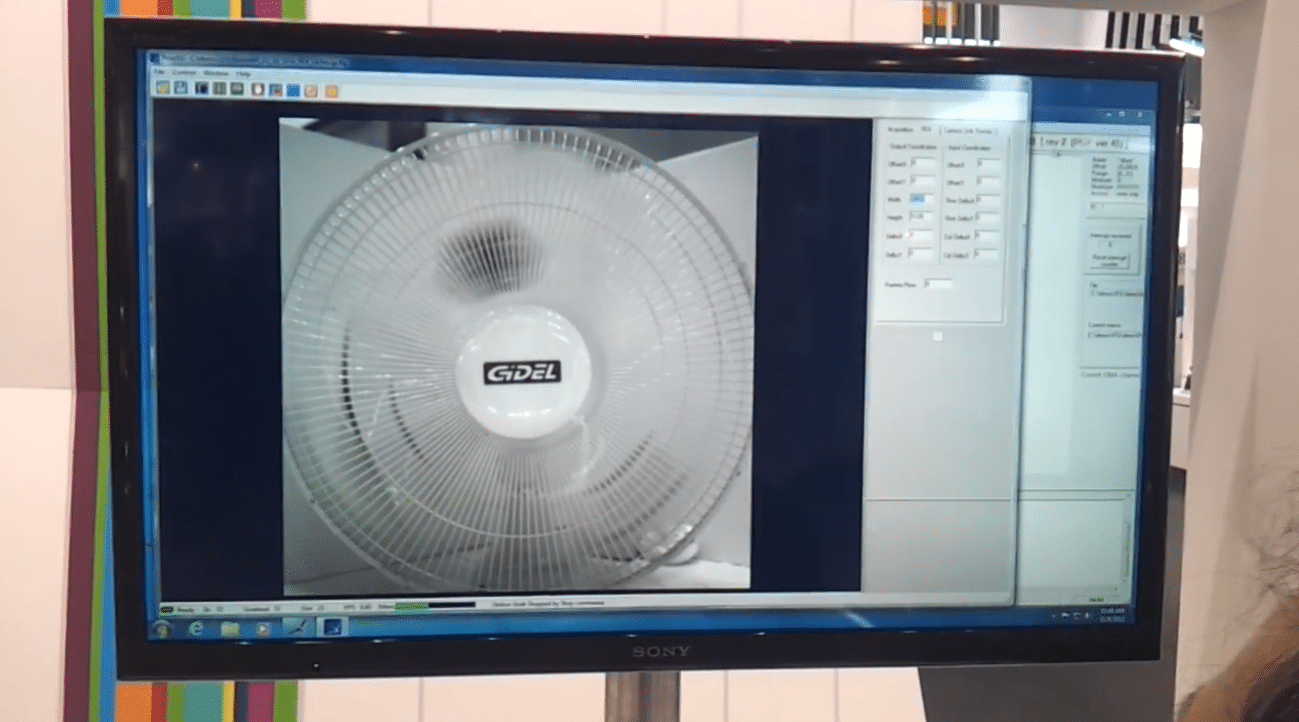
Gidel’s FDB ultra-light FPGA modules enable real-time image acquisition, preprocessing, and enhancement directly at the edge — ideal for drones, gimbals, UAV payloads, robotics, and compact embedded systems.
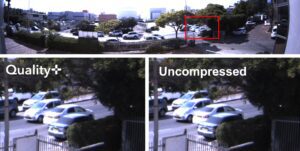
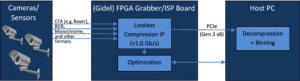
All processing is powered by Gidel’s modular real-time preprocessing, enhancement, and advanced compression IPs (.JPEG, Lossless, Quality+).
Inline enhancement features include:
-
High Dynamic Range (HDR) – Captures superior details in high-contrast lighting conditions.
-
White Balance – Maintains color accuracy across variable lighting conditions.
-
Dynamic Luminance Balance – Preserves consistent brightness under changing illumination.
-
Gamma Correction – Optimizes brightness and contrast for improved clarity.
Real-time compression with Dynamic ROI delivers:
-
Extended recording times without compromising quality.
-
Lower transmission bandwidth for efficient data handling.
-
Accelerated offline compression, reducing storage needs and post-processing time.
Integrated Vision Architecture for Embedded FPGA Processing
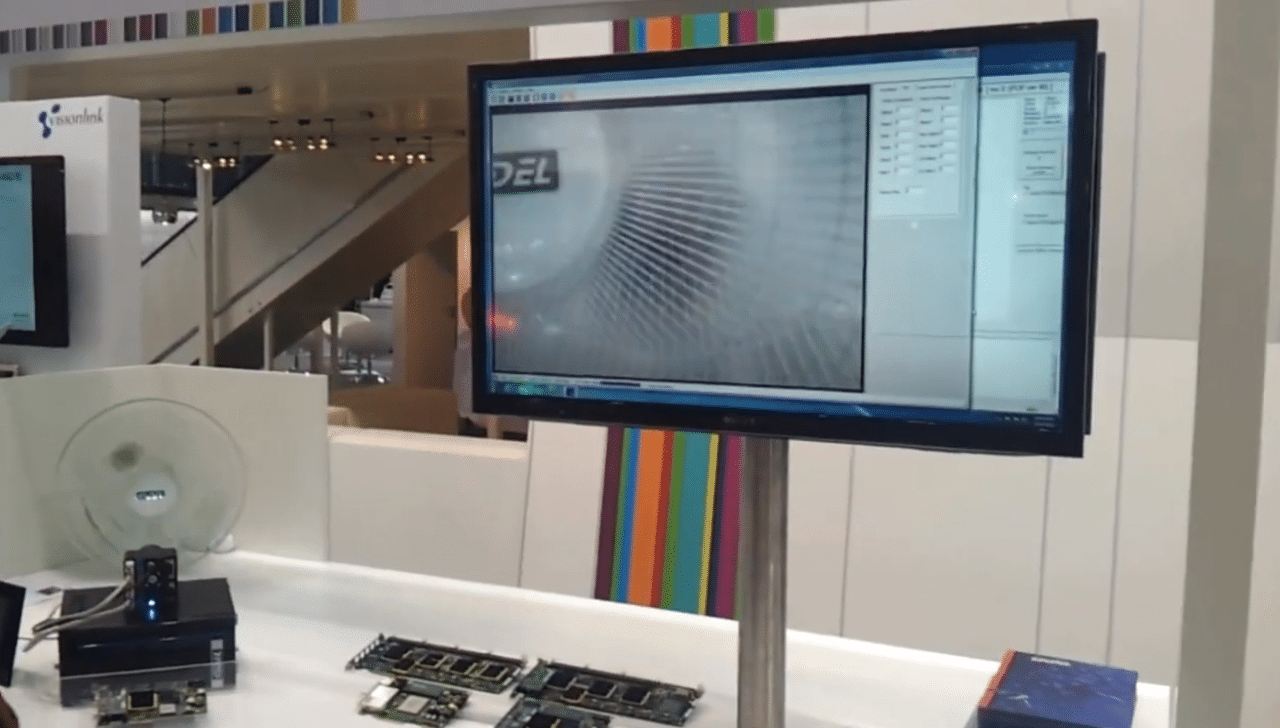
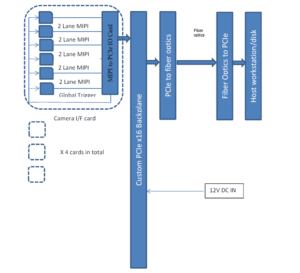
Gidel’s vision architecture, implemented within the FDB tiny FPGA modules, supports both the InfiniVision multi-camera vision system and the ProcFG deterministic image acquisition system. Together, they address critical embedded vision challenges, including bandwidth handling, synchronization, connectivity, and system scalability.
InfiniVision enables flexible, synchronized multi-camera acquisition across large sensor arrays, while ProcFG provides a deterministic acquisition model optimized for fixed timing, guaranteed frame capture, and line-scan–oriented pipelines. This architectural flexibility allows the FDB platform to manage multiple high-speed data sources, merge parallel sensor inputs, and maintain predictable real-time behavior.
On-module FPGA memory, advanced buffering, and deterministic dataflow control ensure stable acquisition and enable real-time image processing. As a result, FDB modules deliver reliable and predictable performance, even in compact, space-constrained, high-resolution embedded systems.
Flexible Integration Options
The FDB modules adapt to diverse integration needs. They can operate as standalone embedded processing engines inside miniature systems or as part of a fully customized solution incorporating on-board FPGA image enhancement, real-time compression, precise multi-sensor synchronization, and advanced I/O control. As a result, the FDB series provides exceptional flexibility and scalability for any embedded imaging or vision architecture.
SDK, Development Tools, and Integration
The FDB modules are supported by Gidel’s SDK with intuitive GUIs and APIs for fast system integration.
The ProcVision Suite provides advanced FPGA programming, debugging, and validation tools, enabling rapid customization of data flows and real-time processing pipelines.
In addition, the FDB series features an advanced multi-port DRAM controller that splits memory into
up to 16 parallel logical banks with simultaneous access. Each module is supplied with a
PCIe carrier board and development utilities, allowing engineers to begin testing immediately.
As a result, development cycles are shorter, reliability is higher, and time-to-market is significantly improved.
Why Choose the FDB modules?
-
Ultra-compact footprints: FDB16 (49 × 54 mm), FDB27/FDB66 (58 × 58 mm).
- Extremely light: FDB16 (30g), FDB27/FDB66 (35g).
-
Altera Arria® 10 FPGA for mid-range processing power.
-
Up to 10 GB DRAM @ 24 GB/s with 16 high-speed transceivers.
-
Tiny FPGA design optimized for embedded and space-limited systems.
-
Complete development environment with carrier board and advanced tools.
For larger FPGA modules with even greater performance, explore the Proc10M and Proc10N modules.
Target Applications
- Embedded systems
- Robotics
- Drones
- UAV payloads
- Gimbals
- Compact broadcast and image-processing solutions
- multiple high-speed edge sensors
General
- FDB16: Altera Arria 10 160 GX
- FDB27: Altera Arria 10 270 GX
- FDB66: Altera Arria 10 660 GX
- FDB16: 160K
- FDB27: 270K
- FDB66: 660K
- FDB16: 12.8 GB/s
- FDB27: 12.8 or 24 GB/s
- FDB66: 16.8 GB/s
- FDB16: 2 or 4 GB
- FDB27: 2 or 10 GB
- FDB66: 9 GB
- FDB16: 12 transceivers (2 Rx only)
- FDB27: 12 or 16 transceivers (2 Rx only)
- FDB66: 12 or 16 transceivers (2 Rx only)
- FDB16: 12 × 3.0V, 4 × 1.2V, 36 × 1.8V
- FDB27: 12 or 42 × 3.0V, 4 × 1.2V, 36 or 52 × 1.8V
- FDB66: 12 or 42 × 3.0V, 4 × 1.2V, 36 or 52 × 1.8V
- FDB16: 49mm x 54mm
- FDB27: 58mm x 58mm
- FDB66: 58mm x 58mm
- FDB16: 30g
- FDB27: 35g
- FDB66: 35g
- FDB16: 440 DSP Blocks
- FDB27: 750 DSP Blocks
- FDB66: 2133 DSP Blocks
- FDB16: 312 Memory Blocks
- FDB27: 1660 Memory Blocks
- FDB66: 3374 Memory Blocks
Environmental conditions
- Continuous Operation: 10 - 80% (non-condensing)
- Peak Operation: 10 - 90% (non-condensing)
The FDB modules have been designed for use with carrier boards to enable Modular solutions that reduce risks, costs and Time to Market. User carriers may incorporate any combination of I/Os and configuration schemes.
Gidel offers a PCIe developer’s carrier board allowing the FPGA designers to immediately begin developing their application and proprietary FPGA design.
Want to adjust our FDB Arria 10 Modules according to your Vision?
Grabbers SDK
Application Interfaces
- InfiniVision
- ProcFG
- CameraConfig – Camera discovery and configuration
- ggvcon – GigE Vision network configuration
- InfiniVision with supporting examples
- ProcFG with supporting examples
- Gen<i>Cam GenTL producer libraries compatible with C/C++ compilers
- InitCam for developing user Gen<i>Cam camera configuration application
- GigE for developing camera network communication applications
Software Compatibility
- MVTec Halcon machine vision software
- Camera control Gen<i>Cam based application
- Windows 11
- Windows 10
- Windows Server 2022
- Windows Server 2019
- Windows Server 2016
- Linux (kernel 2.6.x- 6.12)